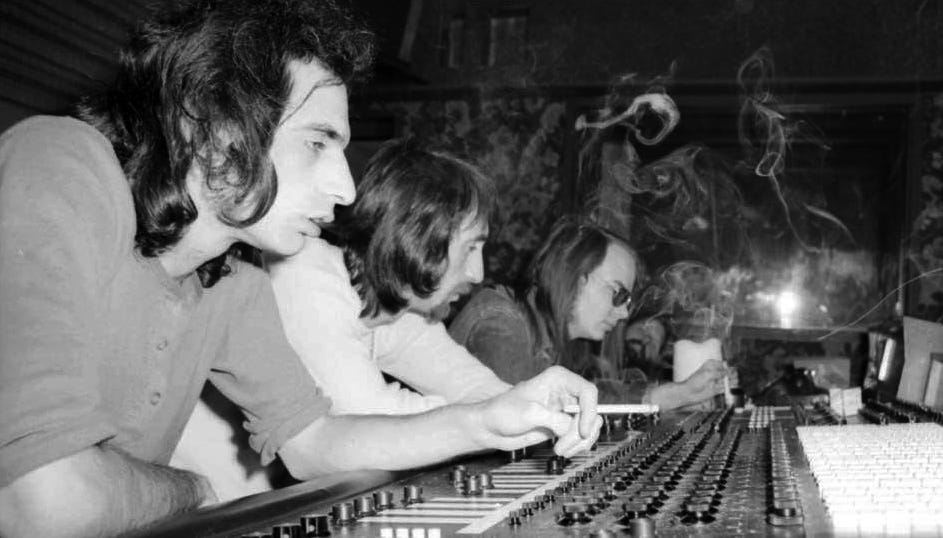


You can hear the pain in Gary Katz’s voice.
“Our biggest disappointment,” the producer says, when the subject of Steely Dan’s Katy Lied comes up.
WLIR-FM host Denis McNamara is interviewing Katz in January 1979, four years after the album’s release. Still, it’s a sore subject. And his lingering bitterness is totally justifiable.
Katy Lied was poised to be what Aja would become: Steely Dan’s audiophile masterwork—a project fully harnessing state-of-the-art studio technology to give listeners a remarkably lush, immersive sound experience. “The album was recorded and, in high-fidelity terms, was the best-sounding thing we had done, far and away,” Katz says.
But during mixing they discovered something strange: a glitch in the dbx noise-reduction system at ABC Recording Studios was preventing them from properly decoding the audio information they had captured on tape. Katz, engineer Roger Nichols, and some of the band members explored every possible solution, even at one point flying out to dbx headquarters in Boston in the middle of the night. Alas, nothing could be done.
That is why today, when you put on Katy Lied—even a remastered reissue—the record sounds suboptimal. Or as Denny Dias once described it, “dull and lifeless.”

“Although there are some songs on [Katy Lied] that to this day are still my favorites, it is my biggest disappointment of any of the albums,” Katz tells McNamara in the second part of a three-episode broadcast, which also covers Pretzel Logic and The Royal Scam. “So I don’t listen to it anymore as a rule.”
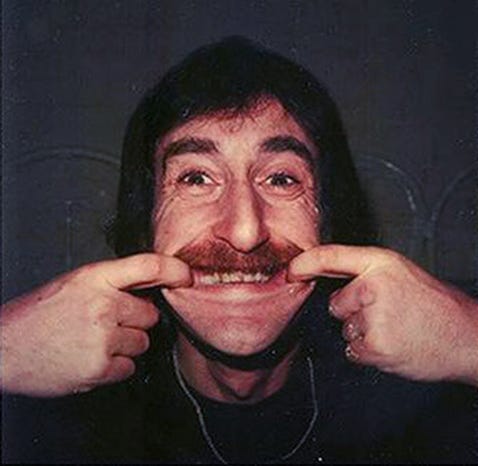
“Your picture was on it,” says McNamara, trying to lighten Katz’s mood. “It’s the first we got to see you.”
“That,” Katz deadpans, “was the beginning of the disappointment.”
In Part 3, Katz talks about Aja, so stay tuned for next week’s newsletter. This piece is part of the series “From the Archives of Brian Sweet,” in which Expanding Dan joins forces with the author of the definitive Steely Dan biography, Reelin’ in the Years, to explore his extensive trove of unpublished and rare interviews.